Electric motors are everywhere. As new challenges face the national electrical grid, from AI data centers to EV adoption, will motors continue their electricity consumption dominance moving forward?
Written by Harry R. Kennard and Michael E. Webber
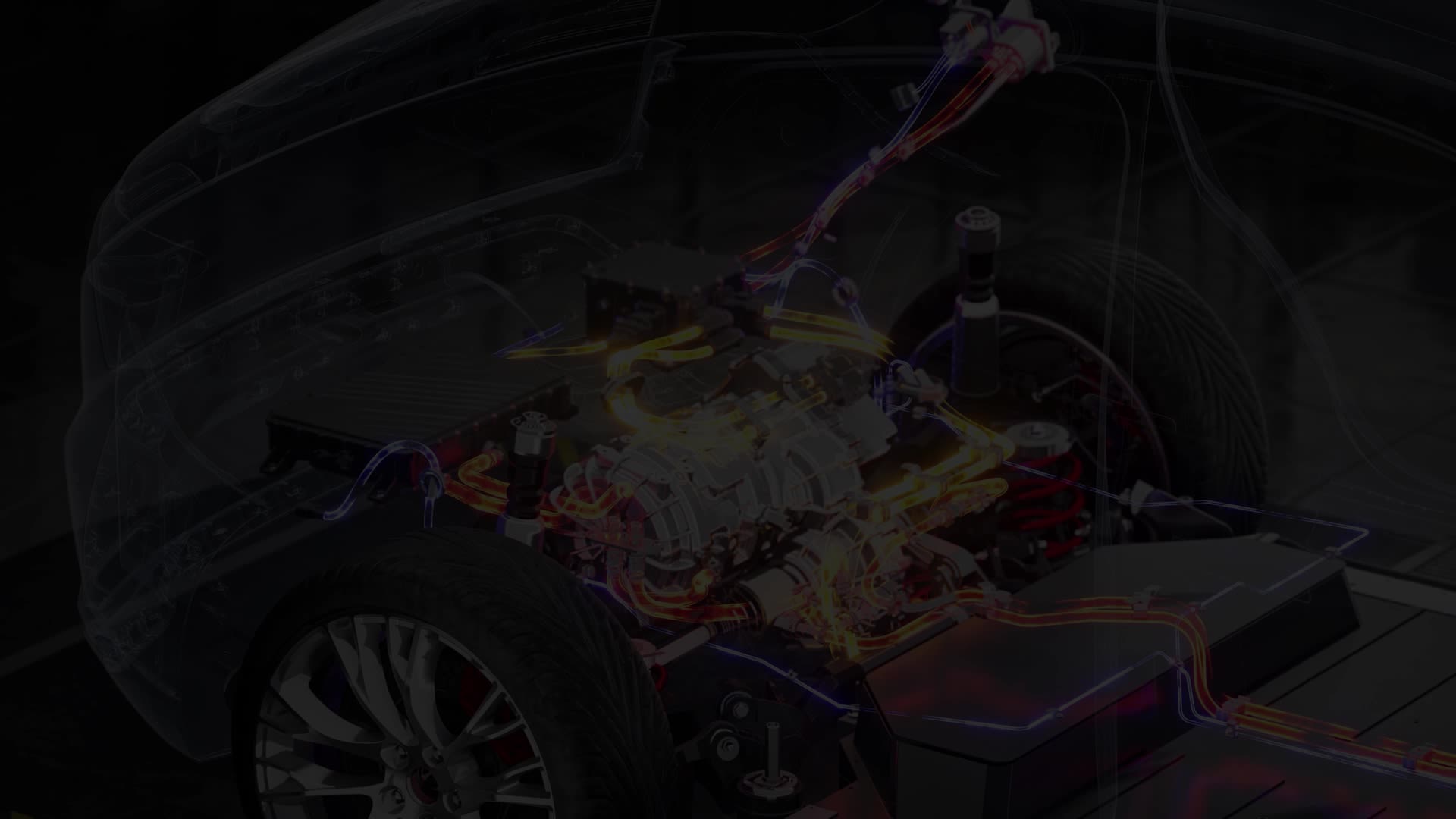

SINCE THEY WERE FIRST DEMONSTRATED in the early 19th century, electric motors have become a ubiquitous feature of modern societies. They provide not only the rotational force–torque–required to drive belts, pulleys, and machine tools, but also the compressors, blowers, and pumps that move fluids for cooling and heating our homes, factories, offices, and retail spaces. They range in size from the tiny motors that make our cellphones vibrate to dime-sized ones that once-upon-a-time spun hard disks or DVDs, to massive ones that drive huge industrial fans in advanced aerodynamics test facilities.
Except when in nature, most of us are almost never more than a few feet away from an electric motor.
Despite their central importance to our daily lives and the energy system, electric motors receive relatively limited direct attention from policy makers. Even simple questions of how many motors exist in the economy and how much energy they consume seem to be missing from our discourse. Compare this treatment with the prominent lightbulb efficiency standards from the Energy Independence and Security Act of 2007 or the fuel economy standards for automobiles.
This neglect can create subtle headwinds to motor innovation or to investments in motor maintenance and efficiency—measures that potentially save money and make our electric grid easier to operate. While electrical generation sources—such as steam power plants, wind turbines, and solar panels—are counted carefully and monitored with sub-second precision, knowledge of how many electricity motors are deployed or how much energy they consume is limited to periodic surveys and estimates. The result of this inattention is we are left with an imprecise and anecdotal rule of thumb: Electric motors use around 50 percent of all electricity produced.

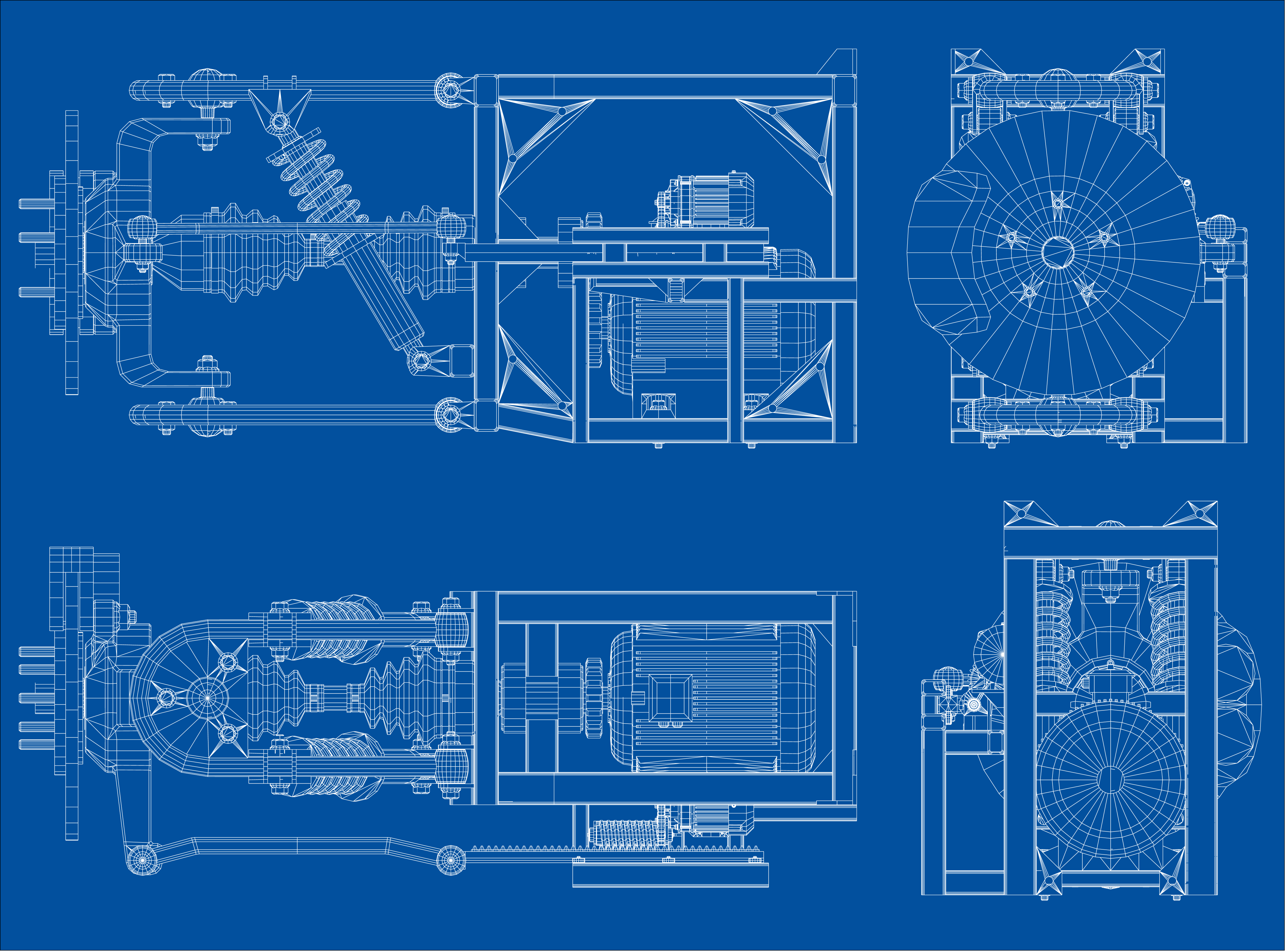
A detailed blueprint of a modular compressor on a blue background highlights its electric motor and suspension components. Image: Getty
A detailed blueprint of a modular compressor on a blue background highlights its electric motor and suspension components. Image: Getty
“Electric motors are diverse in terms of power and mode of operation, which has implications for efficiency.”
A more refined picture
Between 1950 and 2000, U.S. electricity demand saw a steady increase before leveling off in the decades since (see figure 1 below). But annual electricity use in the United States has been largely unchanged at around 4,000 terawatt hours (TWh) for the first part of this century.
In a surprising validation of the previously mentioned rule of thumb, motors have indeed accounted for about 50 percent of total electricity use in recent years, falling from around 60 percent in earlier decades. This modest change maps onto larger structural shifts in the U.S. macroeconomy that occurred through the 1990s and early 2000s, when much of the manufacturing and industrial base—and therefore motor use at factories—moved abroad to lower costs. went to power microprocessors for computing. Around 2010, the widespread adoption of efficient light emitting diodes (LEDs) in place of inefficient incandescent lightbulbs saw the amount of electricity going toward lighting fall to its lowest point. When politicians talk about “keeping the lights on,” perhaps they should be more concerned with “keeping the motors spinning.”
Figure 1: U.S. annual electricity demand by end-use category shows rapid rise through the second half of the 20th century before leveling off in the first two decades of the 21st century, left axis. The share of electricity demand used by motors falls to 50 percent by 2010, right axis. These results are from the authors’ own analysis of likely motor use that synthesizes data from the EIA sectoral survey responses post-2000 and Ayers et al. (2005) for prior years.
However, this picture itself obscures a great deal of granular detail. Electric motors are diverse in terms of power and mode of operation, which has implications for efficiency. A recent series of reports by Lawrence Berkeley National Laboratory examined industrial and commercial motors. These researchers found that nearly 11 million motors operate in the industrial sector, consuming 547 TWh of energy per year. In the commercial sector, where motors are smaller, almost 42 thousand motors consume 532 TWh of energy annually, with both sectors together accounting for around 29 percent of total U.S. electricity demand.

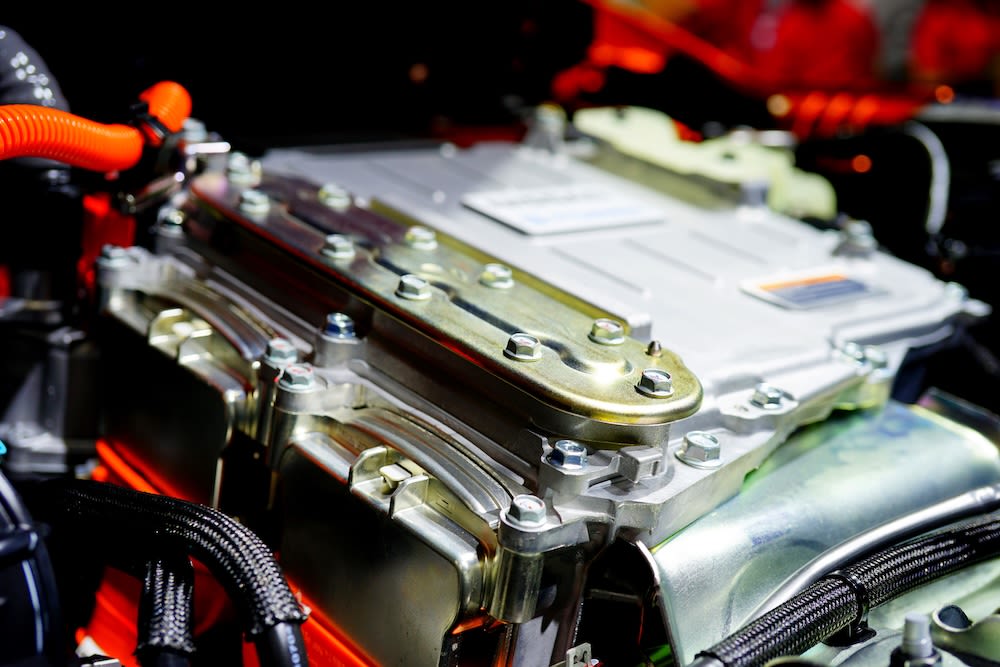
An electric vehicle engine. Image: Getty
An electric vehicle engine. Image: Getty
Crucially, only 16 percent of industrial motors make use of variable speed drives, meaning the vast majority are either on or off and cannot vary their outputs to match varying loads. This limitation has huge implications for efficiency. Using variable speed drives to better match the motor output and the required task could save more than 10 percent of motor energy use across both sectors, and further savings would be possible with more regular motor maintenance. Switching to variable speed drives in the residential context would be similarly effective, especially for air conditioning systems, which are the largest single consumer of electricity in homes.
Grid evolution
At present, most electric motors draw energy directly from the electricity grid. The North American grids are maintained at 60 hertz, meaning the alternating current that flows through transmission and distribution wires oscillates 60 times per second. Larger motor systems and the rotational inertia that accompany them play an important role in helping slow declines in frequency when the grid is under strain. As electric vehicles (EVs) become more common, the share of electricity used by motors will also increase, but since this new load is operated behind a battery, grid stability won’t be impacted in the same way as if new industrial motors were added directly to the grid.
The total amount of electrical energy that ends up in EVs is still very small in the United States, despite the recent uptake of electric or hybridized drivetrains in the past five years. A typical EV might travel 3 miles per kWh of electricity, the latest available figures from 2020 show that at-home EV charging used 3.2 TWh—roughly a third of what was used for America’s hot tubs (9.5 TWh). However, automakers have indicated that in the coming decades combustion engines will no longer be available for light-duty vehicles, meaning that electric motors will become a more substantial part of overall transportation-related energy consumption.
With all the complexities of the current system in mind, it’s important to ask where things might head in the future. Several major changes are coming down the track, some of which might increase the share of motors on the grid, while others might reduce it.
One topical example of new electricity demand is the data centers that technology companies are using to facilitate their new artificial intelligence (AI) products. Estimates are hard to narrow down, but somewhere between 300 TWh and 600 TWh of new data center demand might be added by 2028. As for how much these data centers might influence the share of electricity that goes to motors, about half of this new demand will be for cooling, while the other half will go toward operating microprocessors. It’s motors that compress refrigerant and carry away excess heat from buildings that ultimately provide cooling.

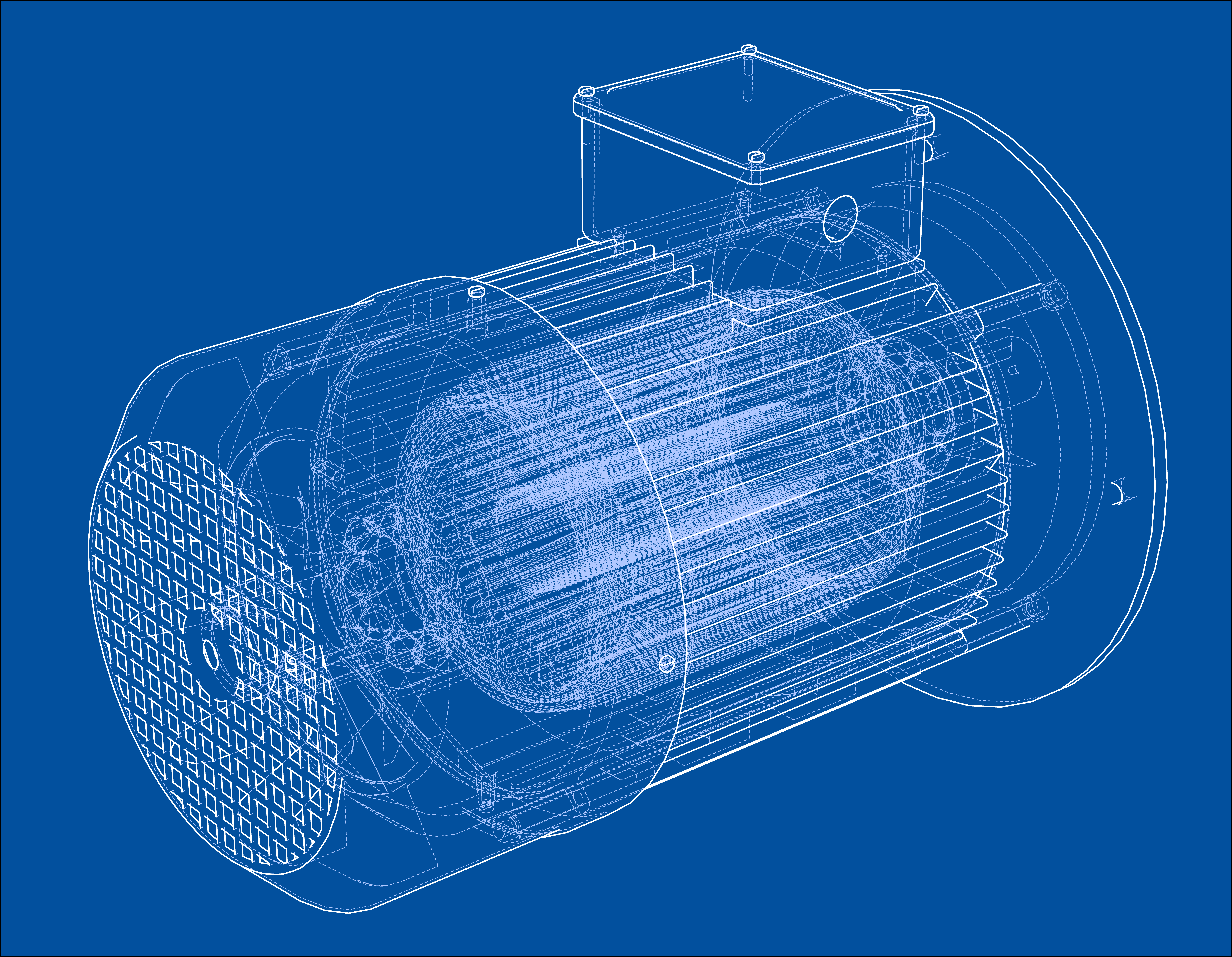
A sketch of an electric motor. Image: Getty
A sketch of an electric motor. Image: Getty
The exact ratio of electricity for cooling, and by extension motor use, to number-crunching chips is hard to predict. Broadly speaking, the larger a data center is the more efficient it is, but there are significant impacts in terms of local climate, with the least efficient centers consuming roughly half their energy for cooling. Location matters as well: Data centers built in Texas or Georgia would require substantially more cooling energy than ones built in Alaska, for example. What is clear, however, is that this new demand won’t substantively change the overall share of electricity used by motors.
A clearer source of this increased share is a result of the building electrification trend, especially in residential and commercial spaces. In this scenario, older gas furnaces that provide space and water heating are being replaced by electric heat pumps. During all but the most frigid winter conditions, heat pumps operate like an AC unit in reverse, using electricity to drive a motor that compresses and circulates a refrigerant to collect heat from outside the home to bring it inside where we need it. When outside temperatures drop into the low single-digits Fahrenheit, a resistance heating mode kicks in that relies less on motors. Additional building electrification will mainly add to electric motor energy usage because new AC and heat pump load will outpace increases from electric cooking. Meanwhile, domestic heat pump sales are currently outpacing those of traditional gas furnaces by 32 percent.
Motoring ahead?
On the other hand, the industrial sector has a host of emerging technologies that will likely decrease the overall share of electricity going to motors. Hydrogen and hydrogen carriers offer a low emission alternative to fossil fuels, not only where high temperatures for industrial processes are needed but in shipping as well. It’s also an essential component in fertilizer production, upon which current farming practices rely heavily.
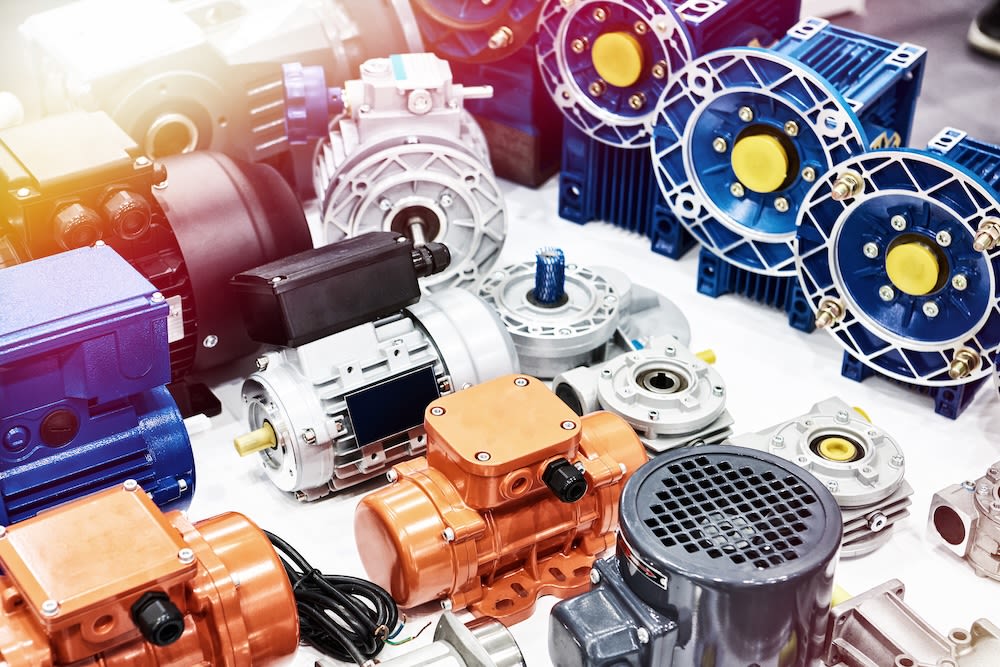
Electric motors of various sizes and shapes. Image: Getty
Electric motors of various sizes and shapes. Image: Getty
If hydrogen consumption is to be scaled up, one potential production method is electrolysis. This method uses large amounts of electricity to split water into its component molecules: hydrogen and oxygen. China currently dominates global electrolyzer markets, but if the United States wants to produce low-emission hydrogen domestically, it will need to catch up. In turn, this production pathway would add large amounts of non-motor share to the grid, reducing the overall motor share in the coming years. Hydrogen and electric arc furnaces are both important for producing green steel, which would further drive up non-motor electricity demand. If reshoring of American industry takes place over the coming decades and a market for low-carbon raw materials emerges, then electricity for non-motor industrial uses will surge.
“When politicians talk about ‘keeping the lights on,’ perhaps they should be more concerned with ‘keeping the motors spinning.’”
In 2018, the United States became the largest producer of oil and gas the world has ever seen—reaching nearly 11 million barrels of oil per day. In 2023, it became the leading exporter of liquefied natural gas (LNG), eclipsing Australia and Qatar at nearly 12 billion cubic feet per day. However, much of the infrastructure that facilitated this boom has yet to be electrified. The next iteration of liquefaction trains for cooling natural gas will be predominantly electric, mostly as a result of chiller motors. A single LNG facility can require hundreds of megawatts of power, on par with some of the hyperscale data centers for AI.
Electrification of upstream oil and gas production and midstream transportation has key advantages with regard to increased control and efficiency, and reduced maintenance. Some of that electricity will be for motors—in the form of down-hole submersible pumps or for pipeline compressors to reduce emissions—and some will be for non-motor controls and valves at the surface in place of dirtier pneumatics.
Examples of Electricity Usage from Existing and Emerging Sources
|
EMERGING ELECTRICAL LOADS |
MOTORS |
NON-MOTORS |
|---|---|---|
|
AI Data Centers |
Cooling Equipment |
GPUs/CPUs |
|
Oil and Gas |
Extraction Pipeline compressors |
Electro-refining Surface controls |
|
Electrolysis for H2 production |
Pumps and compressors |
Electrolyzers |
|
Direct Air Capture |
Fans for capturing air |
Taken together, it’s very challenging to predict what the share of electricity used by motors will be in the coming decades. Nobody yet knows how much American manufacturing will return, bringing with it millions of new electric motors. The building electrification shift to motor-based heat pumps could be stalled by unpredictable supply chains, global trade wars, and expensive installation costs. And EV adoption might surge if gasoline prices increase.
All of these changes could balance each other out, the AI-led data center revolution might not materialize, or these changes could be offset by improvements in efficiency. In a broader sense, the decades long trend toward electrification seems to be continuing, especially in China, which is doing so faster than anyone else, and electric motors look set to be a central part of this story for decades to come.
Harry R. Kennard is a research associate and lecturer in the Cockrell School of Engineering and the LBJ School of Public Affairs at the University of Texas at Austin.
Michael. E. Webber is the Sid Richardson Chair in Public Affairs and McKetta Centennial Energy Chair in Engineering at the University of Texas at Austin.
 Built with Shorthand